In this page
- Three Centuries of History
- 1727 | The Founding of the Accademia
- The Eighteenth Century | Cortona and the European Enlightenment
- A Growing Heritage
- The Nineteenth Century | The Etruscan Chandelier and Major Acquisitions
- Between the Nineteenth and Twentieth Centuries | Girolamo Mancini
- From the Twentieth Century to the Present | A Continuing Story
Three Centuries of History
For almost three centuries, the Accademia Etrusca has been at the heart of Cortona’s cultural life. Founded during a period of intellectual renewal that swept across Europe in the early eighteenth century, it has built a history shaped by research, collecting, heritage preservation, international connections and the sharing of knowledge.
From the foundation of the Accademia to the major acquisitions of the nineteenth century and the research and cultural initiatives of today, its history tells the story of an institution that has preserved its heritage while continuing to engage with the present.
1727 | The Founding of the Accademia
The origins of the Accademia Etrusca lie in the vibrant cultural environment of the Grand Duchy of Tuscany in the early eighteenth century. In December 1726, a group of young scholars from Cortona, including the brothers Marcello, Ridolfino and Filippo Venuti, who had close connections with Florence’s intellectual circles, founded a society initially created to purchase and share scholarly and scientific books.
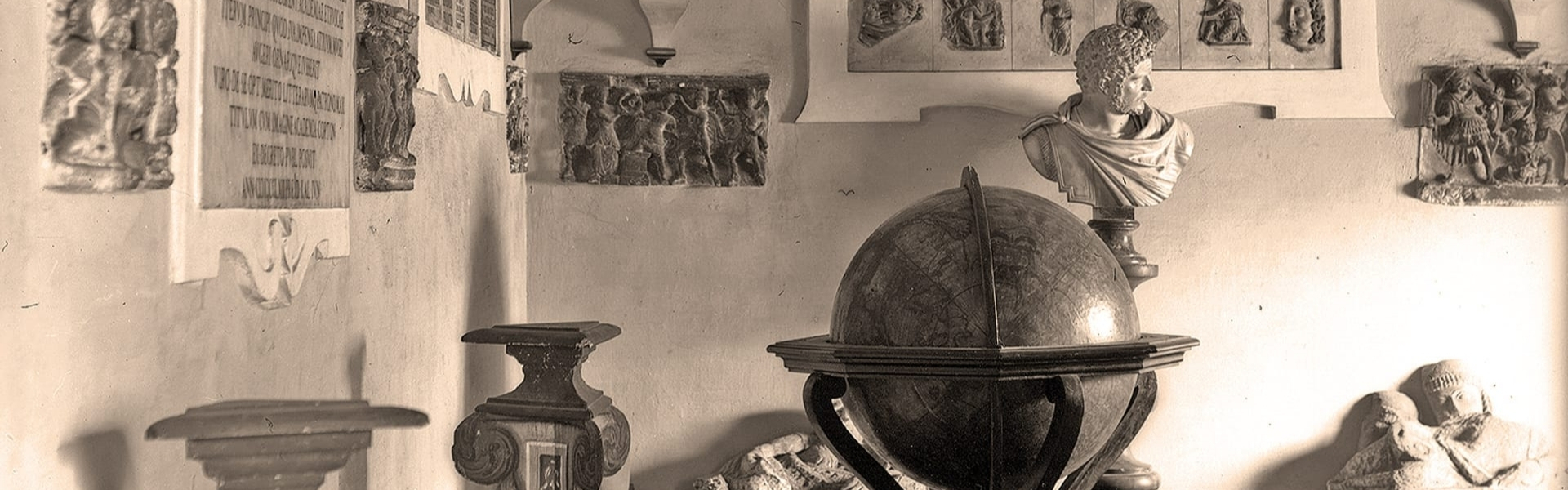
The following year marked a decisive turning point. Abbot Onofrio Baldelli, great-uncle of the Venuti brothers, placed his library at the disposal of the newly established society, together with a rich collection of antiquities, works of art, natural curiosities and scientific instruments gathered over the course of his life. From this group of young men belonging to Cortona’s educated and affluent classes emerged a much more ambitious cultural project: the creation of an Accademia devoted to the study of antiquities, history and antiquarian culture and, above all, to the production and circulation of knowledge.
The Museum and Library were established alongside the Accademia and, from the very beginning, became essential instruments of its cultural activities, with the ambition of serving the “public benefit of all Tuscany”.
The Eighteenth Century | Cortona and the European Enlightenment
During the eighteenth century, the Accademia experienced one of the most dynamic periods in its history. The activities of the Venuti brothers played a crucial role. Their initiative, scholarship and extensive network of contacts enabled the Accademia to become part of a cultural network that quickly extended beyond the borders of Tuscany.
The Cortona-based institution became a meeting place for Italian and international scholars. During the century, some of the most significant figures in European intellectual life established connections with the Accademia Etrusca as members or lucumoni, including Montesquieu, Voltaire and Winckelmann, alongside leading Italian intellectuals such as Ludovico Antonio Muratori and Scipione Maffei. Although far from Europe’s great capitals, Cortona thus became one of the places where the renewed interest in antiquity that profoundly shaped eighteenth-century culture took form.
The Accademia’s international outlook was accompanied by intense scholarly and publishing activity. From 1735, the Saggi di dissertazioni were published, bringing the Accademia’s work to a wider European audience; from 1744, the Notti Coritane recorded the discussions held weekly, in turn, in the homes of its members. In 1750, the Museum Cortonense was published, introducing the Accademia’s collections to an audience far beyond Cortona.
A Growing Heritage
From the very beginning, scholarship and collecting developed side by side. The original collection assembled by Onofrio Baldelli was gradually enriched through donations, acquisitions and bequests. The lucumoni themselves contributed to the growth of the Accademia’s heritage, leaving objects and records that still tell the story of the institution and its extensive network of relationships.
The Museum and Library thus became not simply places of preservation, but instruments through which knowledge could be produced and shared – a role that would remain central throughout the Accademia’s history. Equally important was the culture of social and intellectual exchange fostered by the Accademia through literary games, academic celebrations, theatrical performances and many other opportunities for meeting and discussion.
The Nineteenth Century | The Etruscan Chandelier and Major Acquisitions
During the nineteenth century, the Accademia’s collections continued to grow. One of the most significant episodes took place around the middle of the century, when a major public subscription promoted by the Accademia made it possible to acquire the celebrated Etruscan Chandelier, an extraordinary ancient bronze that would become one of the symbols of both the institution and the city of Cortona, saving it from dispersal on the antiquities market.
During the same period, the Muse Polyhymnia also entered the collections. This enigmatic and fascinating painting has long prompted questions and interpretations concerning its origins.
The growth of the collections reflects an understanding of heritage that has accompanied the Accademia since its foundation: preserving the traces of the past means making them available for study and passing them on to future generations.
Between the Nineteenth and Twentieth Centuries | Girolamo Mancini
Between the late nineteenth and early twentieth centuries, the life of the Accademia became closely associated with Girolamo Mancini, a scholar and leading figure in Cortona’s cultural life. His research made a decisive contribution to the study of the city’s history and documentary heritage. During this period, the Library was also enriched with manuscripts and codices of exceptional importance.
Among them is the celebrated Laudario di Cortona, a thirteenth-century manuscript and one of the earliest surviving collections of Italian laude, today one of the most precious treasures preserved by the Library of the Municipality and the Accademia Etrusca.
From the Twentieth Century to the Present | A Continuing Story
After the difficult years of the Second World War, the Accademia fully resumed its cultural and scholarly activities, progressively renewing its methods and approaches. Research, heritage preservation and interpretation continue to go hand in hand with publishing, cultural initiatives, exhibitions and collaborations with scholars and institutions.
Today, the Accademia’s relationship with the MAEC, Museo dell’Accademia Etrusca e della Città di Cortona makes an extraordinary part of the collections built up over the centuries accessible to the public, while the Library and documentary heritage continue to serve as places of preservation, research and knowledge.
Three centuries after its foundation, the Accademia Etrusca continues to engage with the present, opening itself to new collaborations and to the opportunities offered by digital technologies.
Its founding spirit remains unchanged: to study the past, create new knowledge and share it with the present.
Read more
Key Figures
Discover the key figures of the Accademia Etrusca of Cortona: founders, scholars and intellectuals who shaped its heritage and reputation.
Palazzo Casali
Discover Palazzo Casali, home to the Accademia Etrusca: seven centuries of history, from the rule of the Casali family to the opening of the MAEC in 2005.
History
Three centuries of research, collecting and culture: explore the history of the Accademia Etrusca, from its 18th-century origins to the present day.